A water bill can climb even when the cabinets are dry and no faucet is dripping. A toilet may lose water silently into the bowl, an outdoor line may leak below ground, or ordinary household use may have changed. A high water bill but no visible leak is a reason to investigate carefully, rather than assume the house needs new pipes.
For homeowners in Merritt Island, the most useful first step is to separate a billing or usage change from unexplained water flow. CB Plumbing can help evaluate plumbing concerns, but a few simple observations can make the service conversation much more productive.
Compare water use before comparing the dollar amount
Look at the gallons or other usage units on the bill, the number of days in the billing period, and whether the reading was actual or estimated. A larger charge with similar consumption may involve a rate or billing adjustment. A longer billing period can also make a month look unusual. Ask your water provider to explain anything that does not match your records.
Then think about what changed at home. Visiting family, more laundry, a pool refill, or a different irrigation schedule can increase use without a plumbing failure. Compare daily use when billing periods differ. For example, a bill covering extra days deserves a different comparison from two equal periods with sharply different consumption. Avoid dismissing a continuing increase just because there was one busy weekend.
Use a quiet-water meter check to narrow the question
If your meter is safely accessible and serves only your home, choose a period when no water is needed. Make sure faucets, irrigation, laundry, dishwashing, and other automatic water uses will remain off. Record or photograph the reading, then compare it later without using water in between. Do not remove utility equipment, reach into an unsafe meter box, or operate the utility’s shutoff.
The EPA recommends comparing meter readings over a two-hour period with no water use; a change can indicate a leak. First account for automatic equipment that may have operated unnoticed. The result identifies unexplained flow through that meter, not the location of a leak. In a condominium or property with shared service, ask management which meter and plumbing serve your unit before interpreting a reading.
A reading that stays steady is useful information, but an intermittent problem can stop during the test. Keep notes about when the bill changed and whether you hear refilling or running water at particular times. If the increase remains unexplained, bring those observations to a plumber instead of treating a single test as a complete diagnosis.
Check a quiet toilet before suspecting a hidden pipe
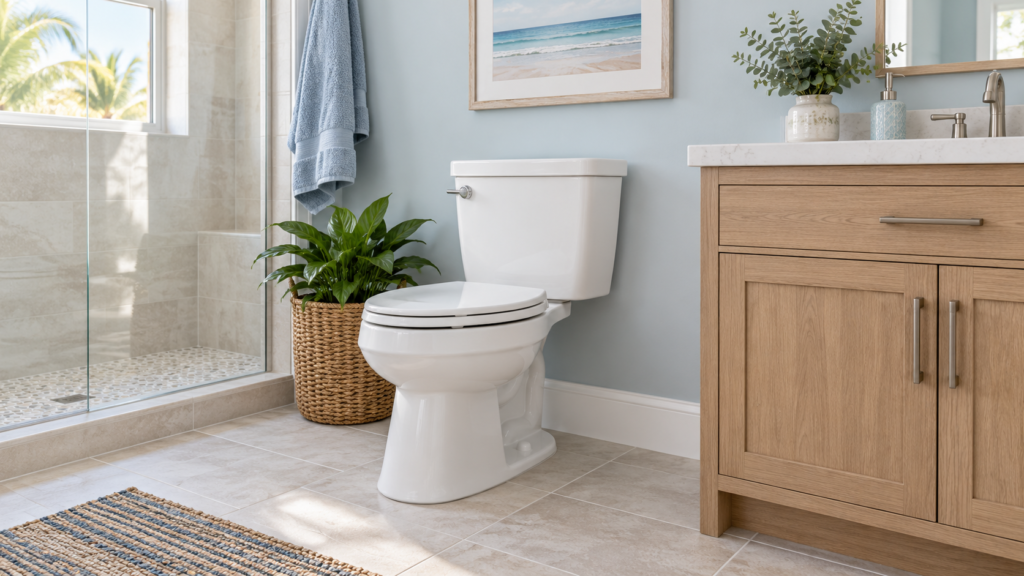
A toilet can pass water from its tank into the bowl without leaving a puddle. Listen for occasional refilling when nobody has flushed. On a conventional tank toilet, if you can safely lift the lid, a simple dye check can reveal water moving into the bowl. Follow the fixture manufacturer’s guidance and handle the heavy ceramic lid carefully; leave unfamiliar tankless or pressure-assisted systems to a professional.
EPA’s method uses a few drops of food coloring in the tank and checks the bowl after ten minutes without flushing. Color appearing in the bowl indicates leakage; flush immediately afterward to reduce staining. This test does not tell you which component needs replacement. A worn seal, an adjustment issue, or another tank problem may require different parts. CB Plumbing’s toilet and faucet services can help address the cause rather than repeatedly adjusting a fixture that still wastes water.
Look beyond the bathroom without opening walls
Check accessible areas under sinks, near appliance supply connections, and around outdoor faucets for fresh moisture. Notice whether a wet patch appears even when irrigation has been off. Photograph what you can see and note the timing. Avoid digging around buried lines or cutting into walls based only on the size of the bill.
Dampness can have causes other than a pressurized supply leak, including drainage problems or water entering from outside. A warm floor patch or reduced pressure is also a clue rather than proof of one specific defect. Professional leak detection helps investigate hidden or hard-to-find plumbing problems before a repair plan is selected. Tell the plumber what you observed and what you tested, including tests that showed no change.
Detection and repair answer different questions
Locating a leak and choosing a repair are separate decisions. A clearly identified fixture problem may need a targeted repair. A concealed pipe problem may require access work, while recurring failures can justify a broader discussion of pipe condition. Ask what evidence supports the proposed location and whether the estimate includes detection, access, plumbing repair, and restoration.
A smaller opening may reduce disruption, but the least invasive approach is not automatically the right repair for every pipe or location. Conversely, one high bill alone does not establish that a full repipe is necessary. Ask the plumber to explain the alternatives, what remains uncertain, and how the source will be checked after the work. Clear scope matters more than a confident guess about what is behind the wall.
Know when observation should give way to a service call
Call promptly if you find spreading water, ongoing flow you cannot explain, or a wet area that is growing. Keep away from water near electrical equipment and do not touch switches or equipment while standing in water. If you already know the location of your own accessible water shutoff and can reach it safely, use it to limit an active supply leak; do not force a stuck valve.
For an unexplained bill without active damage, gather the recent bills, meter observations, toilet-test results, and photographs. These details help a plumber distinguish fixture waste from a possible concealed leak. They also give you a record to discuss with the water provider; any billing adjustment depends on that provider’s policies, so do not assume a repair automatically earns a credit.
Get help with an unexplained water bill in Merritt Island
CB Plumbing serves Merritt Island and surrounding Brevard County communities. If your usage stays unusually high or you find signs of a leak, contact CB Plumbing at (321) 783-6000 and describe what changed. The goal is to identify the source and choose an appropriate repair, with less guesswork about your home’s plumbing.
For company news and plumbing updates, follow CB Plumbing Services on Facebook.